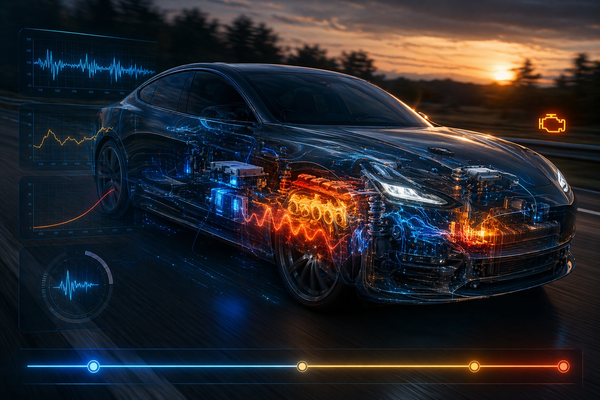
Engineering Cars Don't Fail Suddenly: Why Your Check Engine Light Is Already Too Late Every breakdown leaves a trail of evidence — vibration, voltage, heat — hours or days before the engine quits. The check engine light is the final symptom, not the first signal.
Fleet Predictive Maintenance Saved Our Fleet 47 Weekends. Here's the Math. A 140-vehicle regional logistics fleet ran our Sentinel Pro for nine months. We audited the outcome. The headline number — 47 avoided breakdowns — is less interesting than how the cost model broke down underneath it.
Product The 60Hz Difference: Why Sampling Rate Is the Most Important Number in Vehicle Telemetry Every vehicle telemetry product measures the same things. What separates useful data from expensive noise is the rate at which you sample. Here's why 1 Hz is blind, 60 Hz is diagnostic, and 200 Hz is clairvoyant.
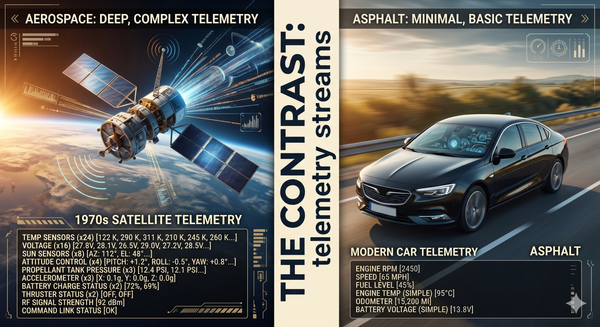
Engineering From Aerospace to Asphalt: Why Your Car Has Less Telemetry Than a 1970s Satellite The diagnostic standard in your car was finalized in 1996. The standard on a communications satellite you've never heard of was better than that in 1978. Here's why the gap exists — and why it's finally closing.
Engineering What 500,000 Vehicles Taught Us About Battery Failure Conventional wisdom says car batteries die in winter. The aggregated data from half a million vehicles tells a much more specific story — and it has almost nothing to do with the temperature outside.